
We’ve all seen it happen: a Reel takes off, the views pour in, and… nothing much changes for the business.
Instagram video marketing in 2026 isn’t about chasing viral moments: it’s about building a predictable growth engine. When we combine timeless fundamentals, clear positioning, strong offers, solid funnels, with the very modern power of Reels, Stories, and AI-driven optimization, Instagram stops being “just a content channel“ and starts acting like a revenue channel.
In this guide, we’ll walk through how we, as modern marketers, can use Instagram video more strategically: which formats to use, how to align them with our funnel, where AI actually helps, and how to turn attention into customers instead of vanity metrics.
Why Instagram Video Still Matters For Growth-Focused Brands
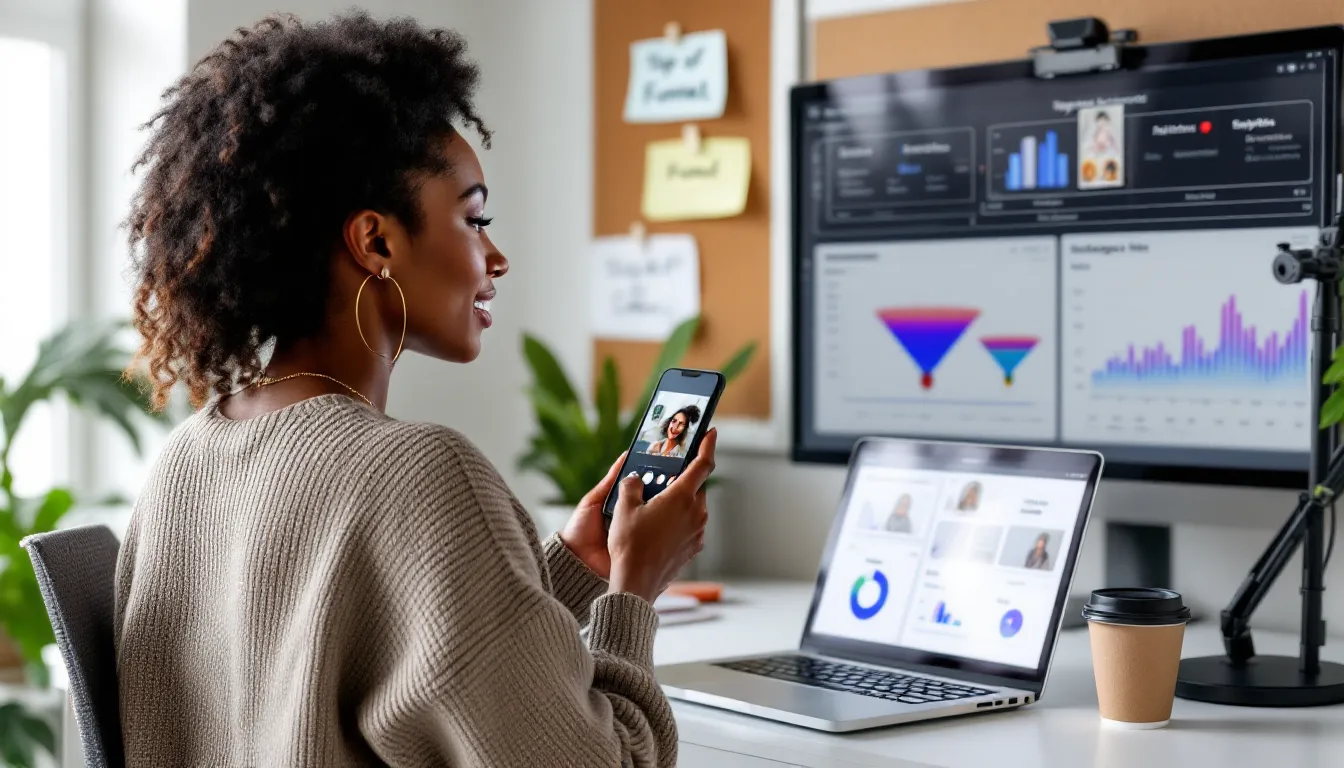
If we’re honest, most of our audiences aren’t reading long captions while they’re standing in line at Starbucks. They’re watching short, vertical video. And Instagram, Reels in particular, still commands a huge share of that attention.
A few reasons Instagram video still deserves a real place in our growth strategy:
- Face-to-camera builds trust at scale
The fastest way to make people feel like they know us is to show up on camera. When we speak directly to the lens, we’re building parasocial relationships, those “I feel like I know you even though we’ve never met“ connections that translate into higher engagement and conversion.
- Reels are still an organic discovery engine
Reels remain one of the most efficient ways to reach people who don’t follow us yet. Even as algorithms shift, short-form video consistently outperforms static posts for reach and watch time. When we pair that reach with a clear funnel, Instagram becomes a top-of-funnel acquisition channel, not just a place for brand vibes.
- Video compresses the trust-building journey
A 30-second Reel can:
- Introduce our brand
- Demonstrate a product
- Share social proof
- Deliver a micro-transformation (a quick tip, a mindset shift)
That’s a lot of value in half a minute. Over time, these repeated touchpoints move people from “curious” to “ready to buy“ much faster than static content alone.
- Instagram plays nicely with the rest of our stack
We can retarget video viewers with ads, send them to email opt-ins, drive them to webinars, or push them straight to shoppable posts. When we treat Instagram video as one piece of a cross-channel system, not an isolated island, it makes everything else perform better.
The opportunity isn’t just “do more video.“ It’s use Instagram video intentionally at each stage of the customer journey, with the help of data and AI to guide what we create next.
Choosing The Right Instagram Video Formats For Your Goals

One of the biggest mistakes we see is treating every piece of Instagram video content the same. Each format is optimized for different behaviors, and when we match the format to the goal, performance jumps.
Here’s how we can think about it:
Story ads: quick attention + traffic
Stories are lean-back, ephemeral, and often consumed with sound on. Story ads are great when:
- We’re pushing time-sensitive offers or launches
- We want to move warm audiences (viewers, engagers) to a landing page
- We’re running simple, direct-response messages like “Swipe up to download“ or “Tap to claim”
Short, punchy creative with a clear CTA works best. Think 10–15 seconds, face-to-camera or product demo, with bold on-screen text.
Reel ads: reach + engagement at scale
Reel ads are perfect when we want to:
- Increase top-of-funnel reach and video views
- Introduce the brand or a new offer to cold audiences
- Build familiarity through repeated exposure
We can repurpose our best-performing organic Reels into ads, then let Meta’s AI optimization find similar audiences. Strong hooks, quick cuts, and clear narrative arcs are key.
In-feed video ads: flexible, full-funnel workhorses
In-feed videos show up alongside regular posts, so they feel more “native.“ They’re versatile enough for:
- Product explainers
- Testimonials
- Before/after stories
- Case studies in short form
We can use them for awareness, consideration, or conversions, just tailor the message and CTA accordingly.
Carousel and shoppable posts: closer to the money
While not strictly “video only,“ video carousels and shoppable video posts are incredibly useful when we’re closer to the purchase decision:
- Carousels let us tell a multi-step story (problem → agitation → solution → proof → CTA) or showcase multiple products/features.
- Shoppable videos allow users to tap and buy within a few seconds. These shine for ecommerce but can work for digital products and bookings too (e.g., “Book now” flows).
The key is to decide the job before we create the content. Are we trying to get discovered, educate, nurture, or convert? Once we’re clear on that, the right Instagram video format becomes obvious.
Designing A Video Strategy Aligned With Your Funnel
Instead of posting random Reels and hoping something hits, we can map our Instagram video marketing to a simple funnel: Discover → Decide → Convert → Delight.
Discover: bring new people into our world
Here, we want reach, views, and profile visits.
- Educational micro-Reels (“1 mistake killing your email open rates”)
- Relatable POV takes (“If you’re still boosting posts instead of building real campaigns…”)
- Trend-adapted content that still aligns with our positioning
This is where face-to-camera video is powerful. We’re not just shipping information: we’re introducing a personality and point of view.
Decide: deepen trust and authority
Once people discover us, they need reasons to stick around.
- UGC and customer testimonials: stitched reviews, reaction-style videos, before/after stories
- Behind-the-scenes: how we work, process peeks, culture moments
- Mini case studies: “How we took CAC down 32% in 60 days“ in a 30–45 second story arc
AI can help us here by mining comments, DMs, and call transcripts to surface the objections and questions we should address in our videos.
Convert: make the next step irresistible
This is where we combine strong offers with frictionless paths.
- Reels + shoppable tags (for ecommerce)
- Story sequences counting down to a launch or promo
- In-feed video ads driving to a focused landing page or lead magnet
We want clear, specific CTAs: “Comment ‘guide‘ and we’ll DM you the playbook“ or “Tap the link in bio to book your audit.“ Meta’s conversion-optimized campaigns and Advantage+ targeting can automatically prioritize the audiences most likely to take these actions.
Delight: turn customers into advocates
Post-purchase content is underused, but powerful.
- Quick-start tutorials and “how to get the most from this“ videos
- Community features and shoutouts
- Feature updates and roadmap peeks
This is where we turn buyers into repeat customers and UGC creators, and that UGC loops right back into the top of the funnel as proof.
When our Instagram video strategy mirrors our funnel, every content idea has a place and a purpose. We’re not posting to stay “consistent”: we’re posting to move people to the next step.
Creating Video Content That Stops The Scroll And Drives Action
Algorithm changes come and go, but some fundamentals of thumb-stopping creative aren’t going anywhere.
Nail the first two seconds
Our hook determines whether anyone sticks around long enough to hear our insights.
Hooks that work well on Instagram right now:
- Pattern interrupt: A surprising visual or statement. “Stop boosting posts. Here’s why it’s killing your ROAS.”
- Direct payoff: “In 30 seconds, you’ll know exactly how to fix low Reel engagement.”
- Call out the right person: “If you manage ads for a SaaS brand, this is for you.”
We can use AI tools to generate 10–20 hook variations from one script, then A/B test them as separate Reels or ads.
Prioritize authenticity over perfection
The data is pretty clear: raw, slightly imperfect video often outperforms glossy, overproduced content on Instagram. Why? Because it feels real.
Some practical guardrails:
- Good enough lighting (natural light > complicated setups)
- Clear audio (lapel or simple USB mic is usually enough)
- Quick pacing, trim dead air and pauses
Instead of chasing cinematic perfection, we focus on clarity and energy.
Tell a micro-story, not just share a tip
Even in 20–30 seconds, we can structure a story:
- Problem: what our viewer is experiencing
- Tension: why it’s painful or expensive to ignore
- Shift: the insight, framework, or tool that changes things
- Next step: what to do right now
This works whether we’re selling a SaaS platform, an agency service, or an ecommerce product.
Use sound and text strategically
- Leverage trending audio when it makes sense, but don’t force-fit it to our brand.
- Add on-screen text that works even with sound off, many viewers will watch that way.
- Use native captions (or an AI captions tool) to keep things accessible and skimmable.
Our goal isn’t just to stop the scroll. It’s to earn enough attention and trust in each video that taking the next step feels natural.
Publishing, Optimization, And Algorithm-Friendly Best Practices
We don’t need to game the algorithm, but we do need to respect it.
Follow technical best practices
Instagram updates specs often, but a few principles are consistent:
- Vertical 9:16 for Reels and Stories, higher resolution when possible
- Avoid black bars, poor cropping, or tiny text
- Keep files within recommended size limits to prevent compression issues
If we’re repurposing from other platforms, tools like Descript or Kapwing (or built-in AI repurposers) can auto-resize and reframe content for Instagram.
Write captions that sound like us
The caption’s job is to deepen the message and drive action, not to impress other marketers.
What works well:
- Conversational, benefit-driven copy (“Here’s the 3-step script we use to turn Reels into booked calls.”)
- One clear call to action per post
- Occasional longer captions for deeper teaching, mixed with tight, punchy ones
We can use AI to draft a first version, then rewrite in our voice so it doesn’t feel generic.
Engage like a human, not a brand bot
Instagram rewards genuine interaction:
- Reply to comments quickly, with substance
- Use DMs as a relationship channel, not just a sales channel
- Ask questions that inspire real responses, not one-word replies
Over time, this signals to the algorithm (and to our audience) that our account is worth paying attention to.
Post cadence: consistency over volume
We don’t need to post five Reels a day. A sustainable baseline for most brands:
- 3–5 Reels per week
- 3–5 Story frames per day (simple, behind-the-scenes works)
- 1–2 in-feed videos or carousels per week
The right frequency is the one we can maintain while still keeping quality high and leaving room for experimentation.
Tracking Performance, Running Experiments, And Using AI Smarter
If we want Instagram video marketing to drive real growth, we have to treat it like a lab, not a lottery.
Track the metrics that actually matter
Vanity metrics look nice in reports, but they don’t pay the bills. Key numbers to watch:
- Reach & views: Are we getting in front of enough of the right people?
- Average watch time / completion rate: Are hooks and pacing working?
- Profile visits & follows: Is our content compelling enough for people to stick?
- Link clicks, DMs, saves, and shares: Are we sparking action and advocacy?
- Conversion metrics (from ads + UTM tracking): Leads, purchases, booked calls
We can pipe this data into a simple dashboard (Looker Studio, Notion, Airtable) and review weekly.
Run structured A/B tests
Instead of changing everything at once, we pick one variable per test:
- Hook A vs. Hook B on the same core video
- Short version (15–20s) vs. long version (40–60s)
- Face-to-camera vs. product-only footage
- “Comment to get the guide“ CTA vs. “Link in bio“ CTA
On the paid side, we can test:
- Reel vs. Story placements
- Broad AI-driven targeting vs. interest-based targeting
- Different offers or lead magnets
Let each experiment run long enough to gather data, then iterate.
Put AI to work where it’s strongest
We don’t need AI to replace our creativity: we need it to amplify it.
Practical ways to use AI right now:
- Idea generation: Turn top-performing content, FAQs, support tickets, and sales calls into new video angles.
- Script assists: Draft outlines for Reels and Stories that we then refine and personalize.
- Performance insights: Identify patterns across winning content, common hooks, topics, or lengths.
- Content repurposing: Turn webinars, podcasts, and blog posts into multiple Instagram-ready clips.
When we combine human insight (knowing our audience, reading the room, telling real stories) with AI’s pattern recognition, we move from random posting to systematic growth.
Conclusion
Instagram video marketing has matured. The days of “just dance on a trend and hope it goes viral“ are behind us. What’s working now, and will keep working, is a blend of:
- Clear strategy tied to our funnel
- Authentic, face-to-camera content that builds trust
- Thoughtful use of ads, shoppable features, and retargeting
- Data-informed experimentation, supported by AI
If we use Instagram video as a disciplined growth channel instead of a creative dumping ground, we can absolutely turn views into revenue.
Map Your Next 30 Days Of Instagram Video Experiments
To make this real, here’s a simple 30-day roadmap we can adapt:
Week 1 – Foundation & audience clarity
- Define 2–3 core audience segments (e.g., ecommerce founders, in-house marketers, agency owners).
- Audit existing Instagram content to find top-performing topics and formats.
- Set one primary goal for the next 30 days (e.g., email list growth, booked calls, first purchases).
Week 2 – Top-of-funnel experimentation
- Publish 3–5 Reels targeting discovery (strong hooks, quick tips, POV content).
- Test 2–3 hook variations using AI-assisted ideation.
- Start a low-budget Reel ad campaign promoting your best-performing organic Reel.
Week 3 – Nurture and convert
- Share 2–3 testimonial or UGC-style videos.
- Run a Story sequence driving to a lead magnet, waitlist, or offer.
- Launch 1–2 shoppable video posts or conversion-focused in-feed video ads.
Week 4 – Review, optimize, double down
- Pull performance data: views, watch time, follows, clicks, and conversions.
- Identify your top 3 winning topics and hooks.
- Use AI to spin those into a new batch of scripts for the next 30 days.
At the end of the month, we’ll know a lot more about what our audience actually responds to, and we’ll have moved beyond “posting for the algorithm“ into building a real, Instagram-powered growth system.