If you’re looking at marketing automation tools in 2026, you’ve probably come across ActiveCampaign more than once.
It’s usually pitched as “email + CRM + automation + AI” in one place… which sounds great, but also like a potential headache.
This ActiveCampaign review is written for you if you care about ROI, predictable workflows, and not blowing your budget on a tool your team never fully adopts.
Let’s start with the bottom line, then work our way into pricing, pros/cons, workflows, and how it stacks up against alternatives like Mailchimp and HubSpot.
Quick Verdict: Is ActiveCampaign Worth It?
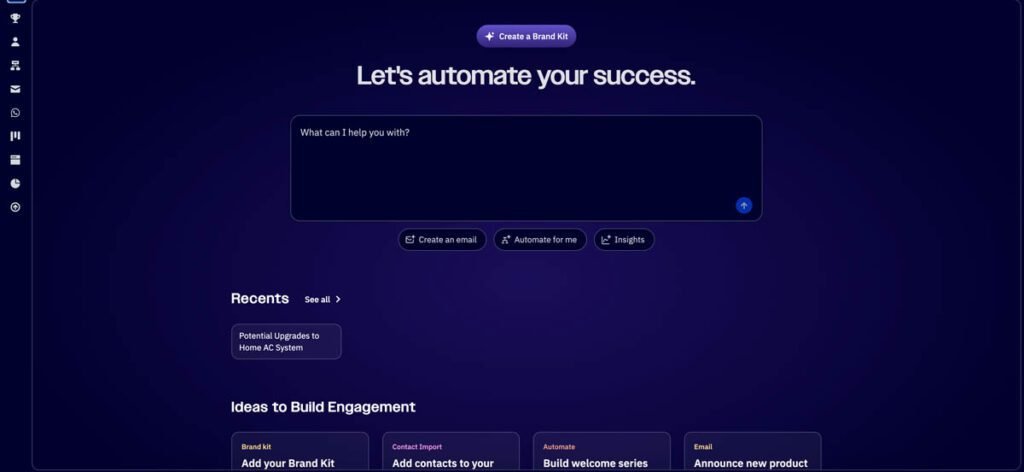
If you run a small to mid-size business, e-commerce store, or agency and you want serious automation plus built-in CRM, ActiveCampaign is absolutely worth shortlisting.
If you just want to send pretty newsletters once a month, it’s probably overkill.
Here’s the short version:
- Yes, it’s worth it if you care about:
- Multi-step automation (welcome journeys, abandoned cart flows, re-engagement, lead nurturing)
- Aligning marketing and sales with a light CRM
- Using AI to speed up segmentation, content, and send-time optimization
- Saving 10–15 hours a week versus manual campaigns and list shuffles
- Probably not worth it if you:
- Only send basic newsletters and promos
- Have a very tight budget and can’t justify more than basic Mailchimp/MailerLite pricing
- Don’t have the time (or someone on your team) to set up and maintain automations
Pros & Cons (Fast Snapshot)
| Pros | Cons |
| Powerful automation builder with true if/then logic and goals | No free plan: pricing ramps up fast as your list grows |
| Solid built-in CRM and sales pipelines for SMBs | Learning curve for complex workflows |
| Strong AI features (predictive sending, content, natural-language segments) | Some integrations (especially WordPress) can be finicky |
| Excellent deliverability and sender reputation tools | Support tiers are better on higher plans |
| 900+ integrations (Shopify, WooCommerce, Webflow, Slack, etc.) |
If you’re willing to invest some setup time, ActiveCampaign gives “near-enterprise” marketing automation at SMB pricing. If you want plug-and-play simplicity, there are easier (but less powerful) options.
Core Features: What You Actually Get
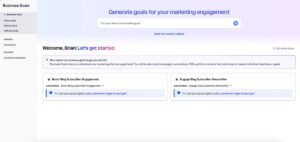

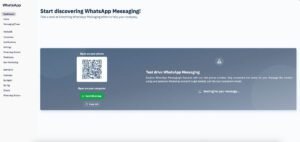
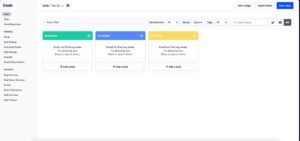
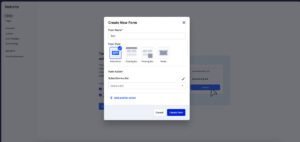
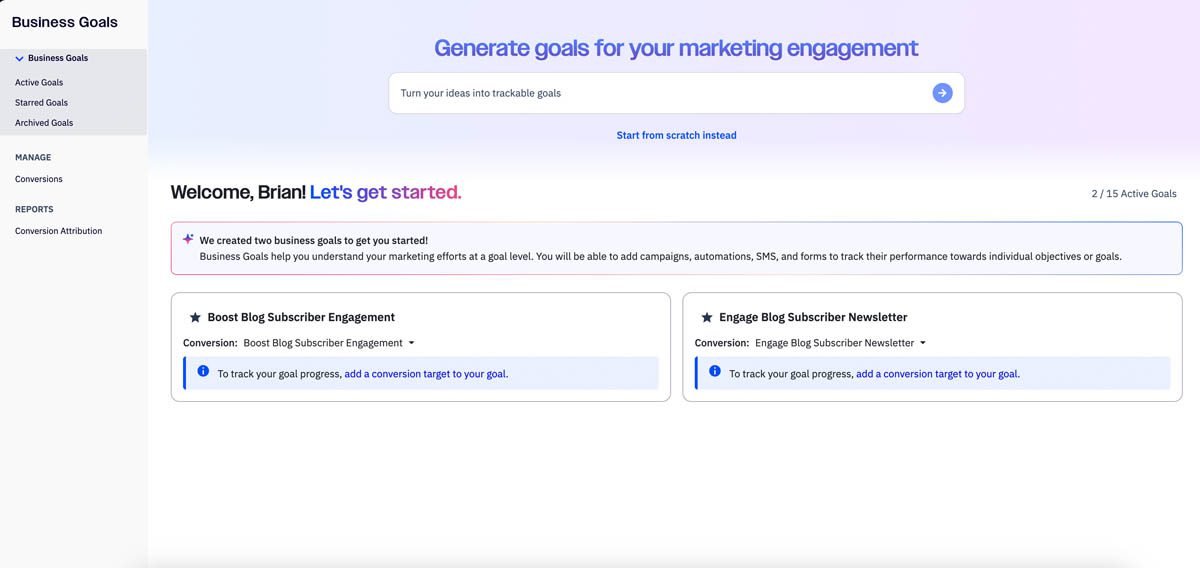
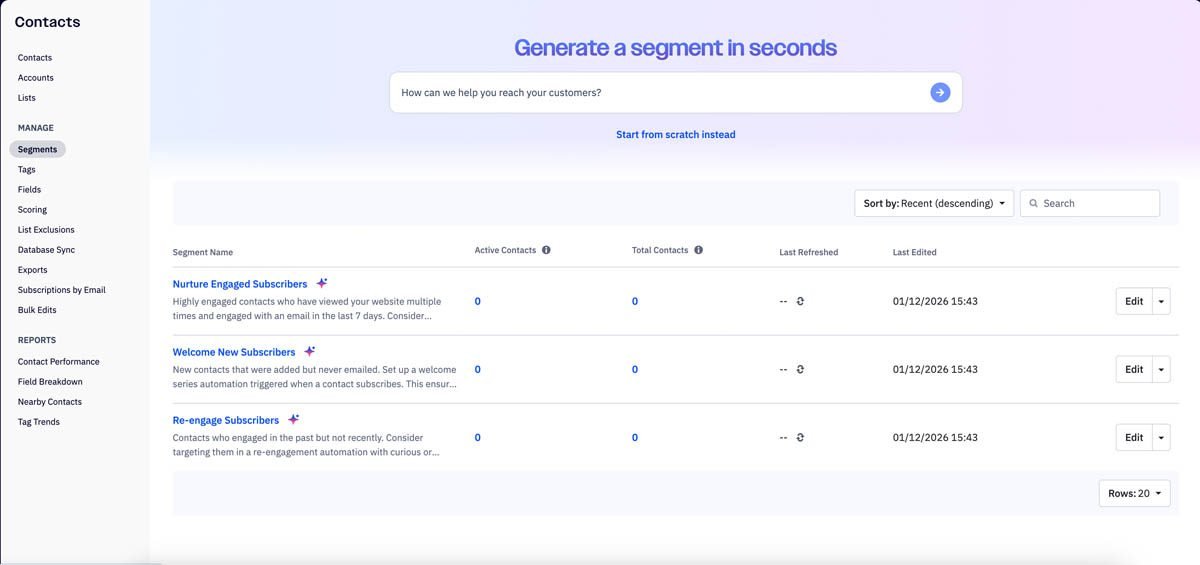
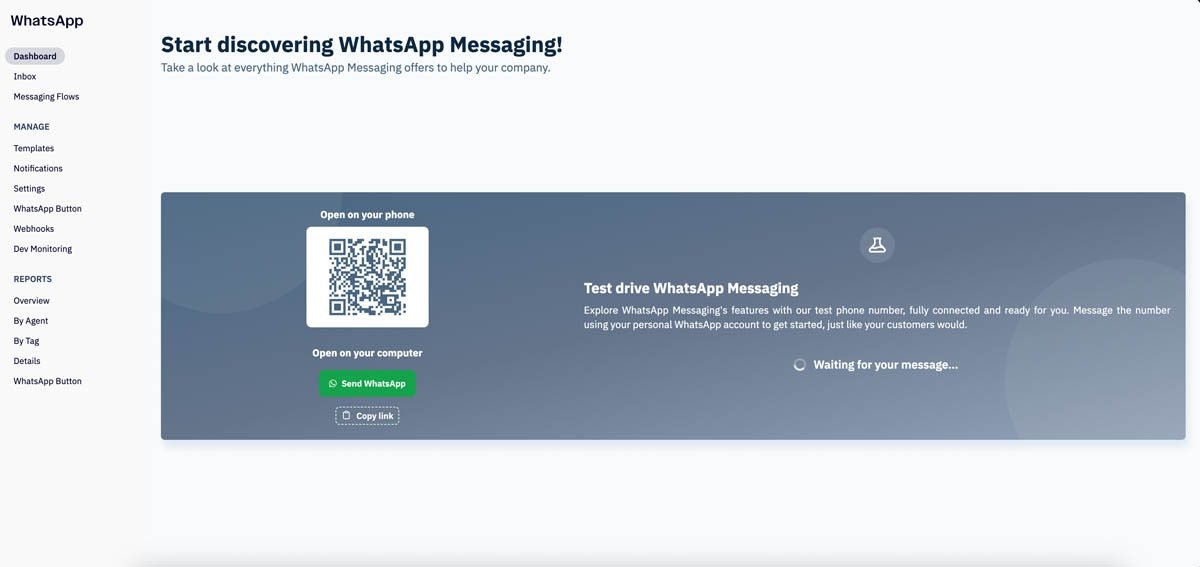
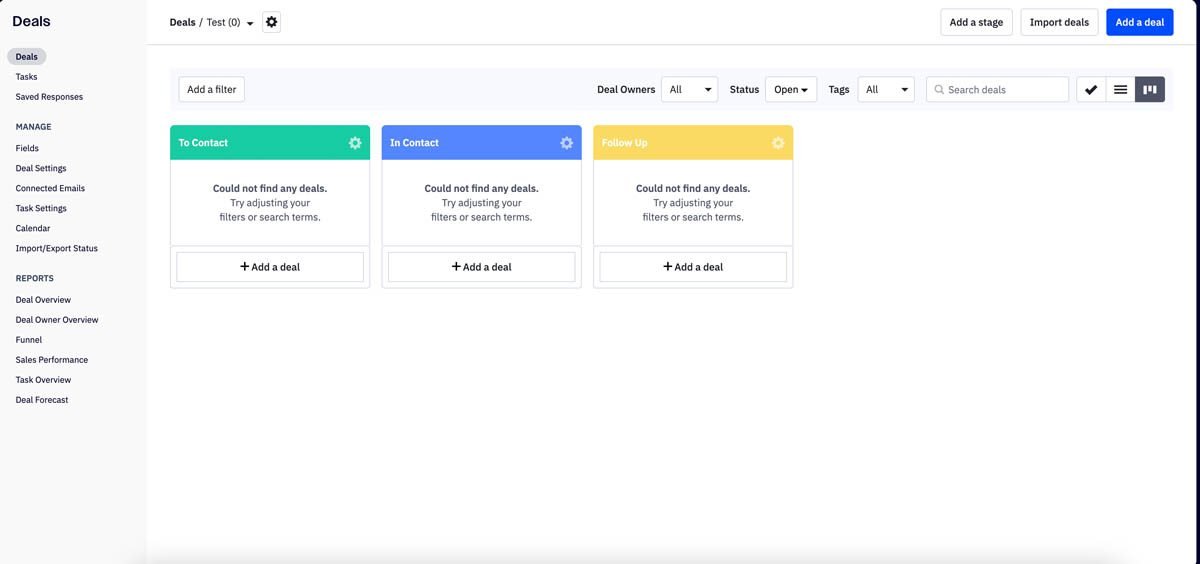
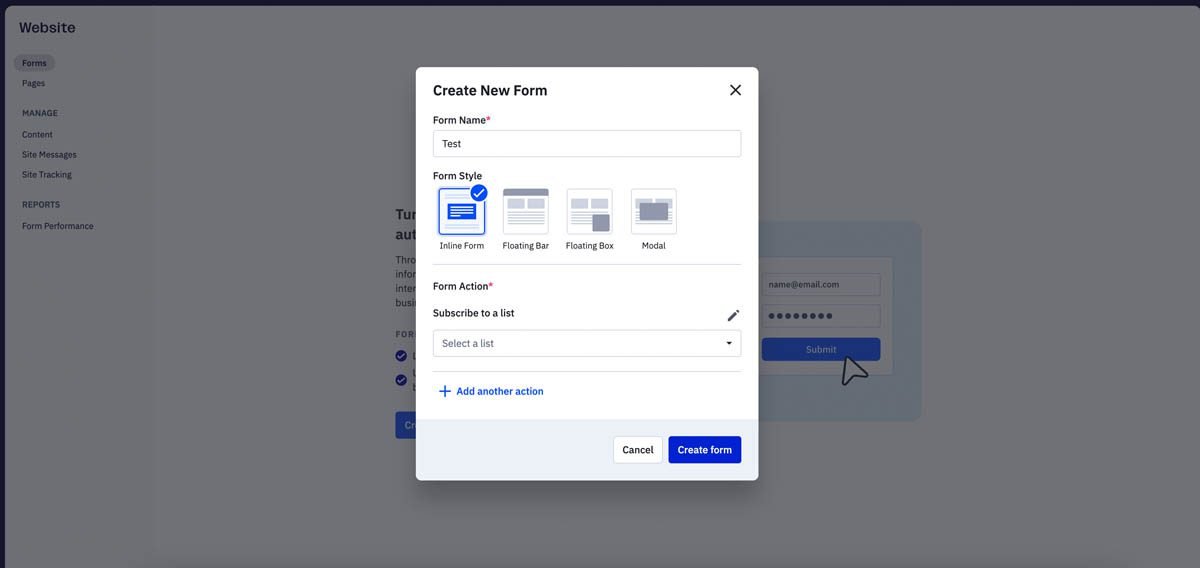
Under the hood, ActiveCampaign is more than “an email tool.” It’s a unified platform that covers:
- Email marketing – Broadcasts, automation emails, transactional-style sequences, dynamic content blocks.
- Automation builder – Visual journeys triggered by signups, page views, purchases, tags, or CRM activity.
- CRM & pipelines – Deals, stages, tasks, win probability, and basic sales management.
- SMS, WhatsApp, site messages – Multi-channel touchpoints in the same flows as email.
- Site & event tracking – Track visits, actions, and use them as triggers or conditions in automations.
- Lead scoring – Score contacts based on engagement or behavior, then route them to sales or nurture.
- Integrations (900+ apps) – Shopify, WooCommerce, Stripe, Typeform, Facebook, Google, Webflow, Slack, and more.
The real value is how these pieces connect. For example:
- Someone joins from a pop-up → gets a tailored welcome series → hits a product page → gets a reminder email or SMS if they don’t buy → becomes a deal in your pipeline if they’re high-value.
Day to day, this means less list juggling between tools and more focus on building flows that actually move revenue.
Automation, Personalization, And AI Capabilities
This is where ActiveCampaign earns its reputation.
Automation engine
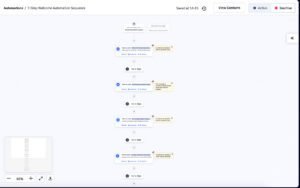
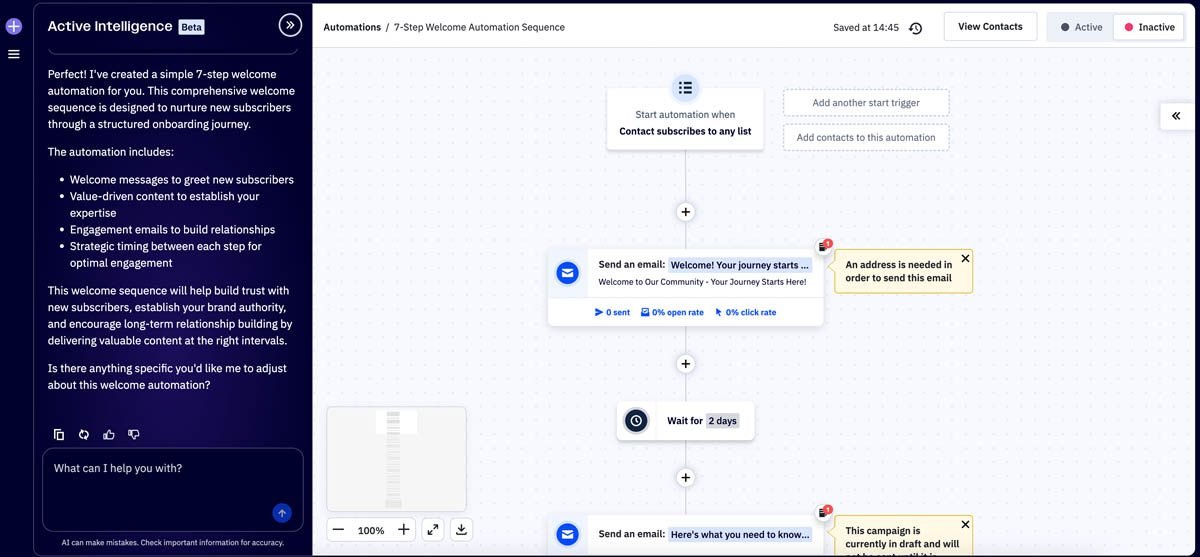
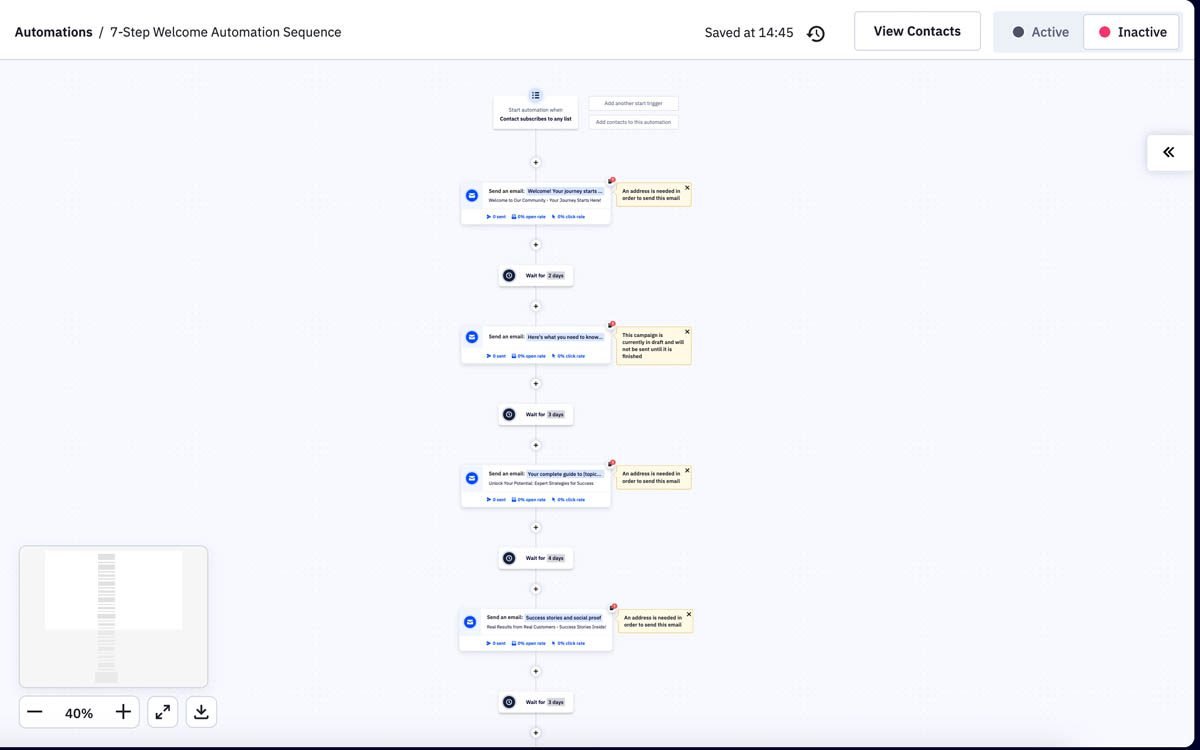
The visual builder lets you chain together:
- Triggers (joins list, submits form, buys, visits page)
- Conditions (if/else based on tags, score, custom fields, UTM source)
- Actions (send email/SMS, wait, split, update deal, notify team, add tag)
- Goals (e.g., “made a purchase”, automations auto-adjust when reached)
You can start from scratch or use one of 900+ pre-built “recipes” for things like:
- Welcome series
- Abandoned cart
- Post-purchase upsell
- Lead magnet delivery + nurture
- Webinar or event follow-up
AI and personalization
ActiveCampaign has leaned hard into AI, but in ways that actually connect to outcomes:
- Predictive sending – Emails are delivered at the time each contact is most likely to open.
- Predictive content – Test multiple email versions, let AI optimize who sees what.
- AI-powered automation from prompts – You describe the flow (“3-email post-purchase upsell for first-time buyers”) and it drafts a starting automation.
- Natural-language segment builder (Segments) – Type queries like, “People who bought in last 60 days but haven’t opened last 3 campaigns,” and get a segment.
In practice, these features don’t magically double your revenue, but they can tighten performance by 10–20% and save a lot of manual testing and list slicing.
Ease Of Use, Learning Curve, And Daily Workflow

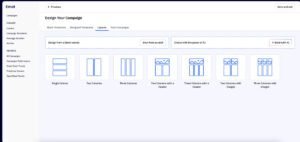
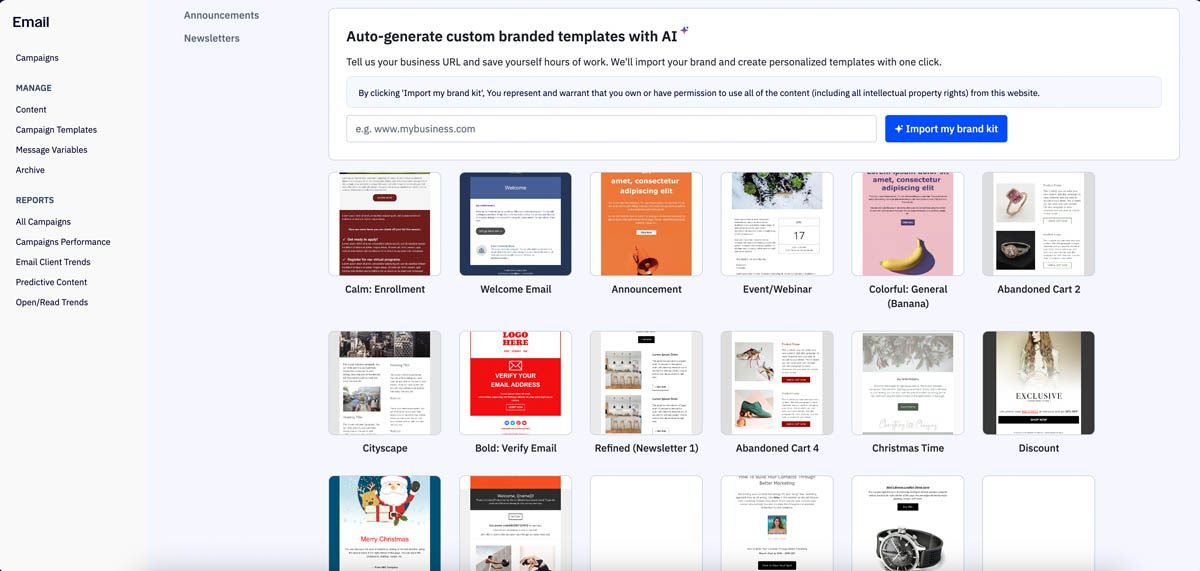
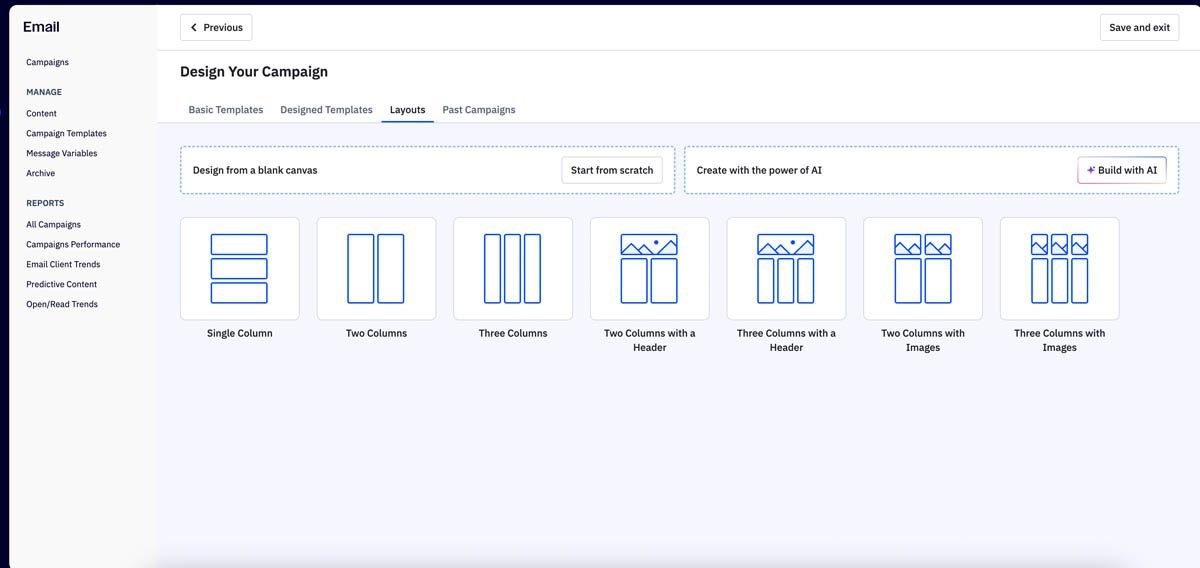
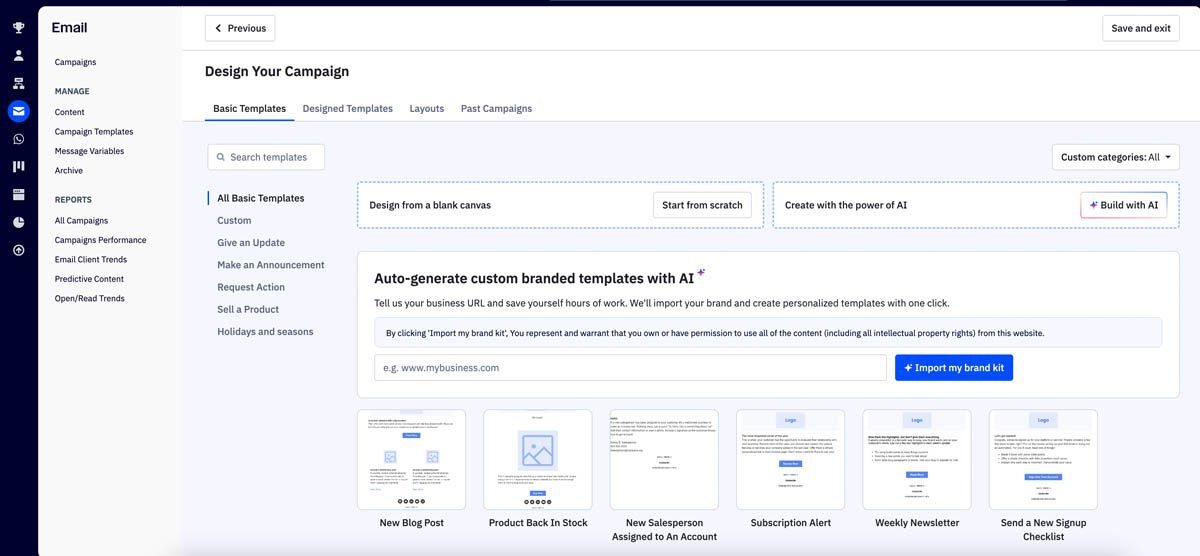
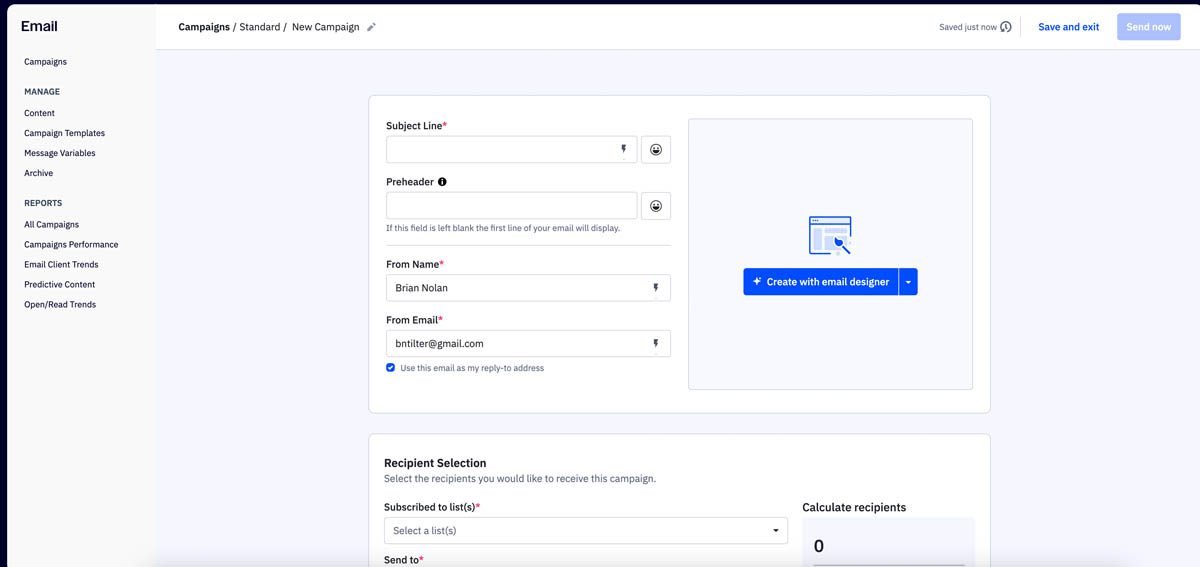
The interface is modern and mostly intuitive: sidebar navigation, clear sections for campaigns, automations, contacts, deals.
You’ll find it easy to:
- Create and design emails with the drag-and-drop editor
- Spin up simple automations (welcome series, one-step follow-ups)
- Use templates and “recipes” as starting points
You’ll feel the learning curve when you:
- Start stitching together multi-branch automations with goals and multiple channels
- Build complex lead scoring and routing rules
- Try to align marketing automations with sales pipelines
ActiveCampaign includes tooltips, inline help, and a big knowledge base. Once you have 2–3 core flows built, day-to-day work feels efficient:
- Marketing focuses on campaigns, segments, and automation tweaks.
- Sales lives in deals, tasks, and contact timelines.
- Management checks dashboards and high-level reports.
It’s not the simplest platform on the market, but for the power it offers, the usability is solid.
Pricing, Plans, And Value For Money
ActiveCampaign’s pricing is based on plan + contact count. There’s no free plan, only a 14-day trial.
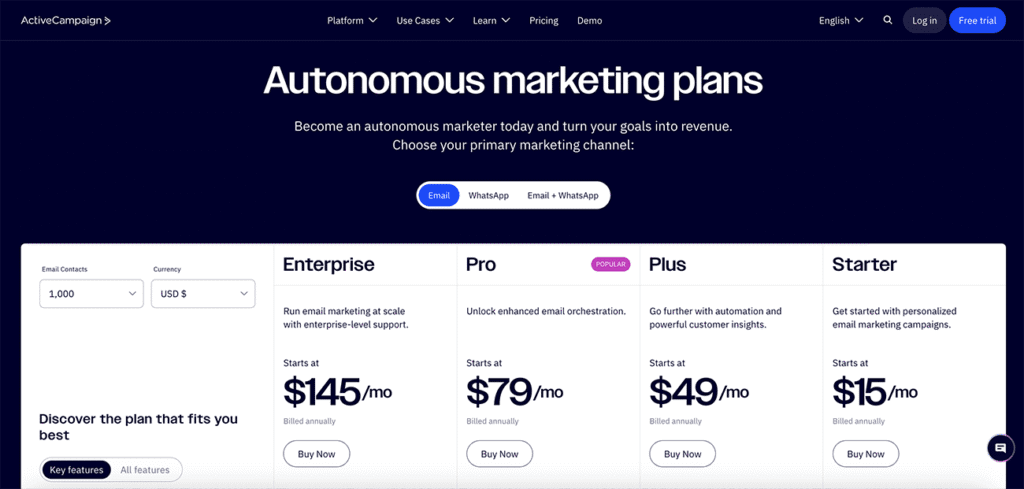
Expect roughly:
| Plan | From (monthly, billed annually) | Key additions |
|---|---|---|
| Lite | ~$15 for 500 contacts | Core email + basic automation |
| Plus | ~$49 for 1,000 contacts | CRM, pipelines, landing pages, lead scoring |
| Professional | ~$79 for 2,500 contacts | Advanced reporting, split automations, site messages |
| Enterprise | ~$145+ (custom) | Custom reporting, SLA, phone support, SSO |
Prices climb as your list grows: once you hit 5,000+ contacts the bill can more than double compared to starter tiers.
Value perspective:
- Compared to simple tools (MailerLite, basic Mailchimp), ActiveCampaign is 3–4x the price, but also several leagues ahead in automation and CRM.
- Compared to heavier platforms (HubSpot, Klaviyo at scale), it’s often cheaper for similar or better automation depth for SMB use cases.
If you’re only sending a monthly newsletter, the cost will feel high. If you’re running multi-step, revenue-focused automations, the time saved and extra revenue can justify the spend pretty quickly.
Who ActiveCampaign Is Best For (And Who Should Skip It)
Best for
You’ll get the most out of ActiveCampaign if you’re:
- E-commerce brands (Shopify, WooCommerce, etc.)
- Abandoned carts, browse abandonment, post-purchase flows, winbacks.
- B2B service companies & SaaS
- Lead magnets, nurture sequences, demo bookings, and basic CRM in one place.
- Agencies
- Managing automated journeys for multiple clients with repeatable templates.
- Scaling creators / info products
- Complex funnels, launches, and segmentation based on behavior and spend.
Who it’s not for
You might want to skip ActiveCampaign if you:
- Only need simple newsletters and occasional promos.
- Have a very small list and can’t justify more than $10–15/month.
- Don’t have anyone to own marketing ops or automation on your team.
- Prefer an all-in-one suite with website, blog, CRM, chat, and support fully bundled (e.g., HubSpot) even if it costs more.
How ActiveCampaign Compares To Popular Alternatives
Here’s the high-level comparison against common choices.
| Tool | Core strength | Relative pricing | Best for |
|---|---|---|---|
| ActiveCampaign | Automation + CRM for SMBs | Mid (scales with list) | SMBs, e-com, B2B with multi-step journeys |
| Mailchimp | Simple email & basic automation | Lower to mid | Basic newsletters, light automation |
| MailerLite | Ease of use + affordability | Low | Small lists, simple setups |
| HubSpot | Full go-to-market suite + CRM | High | Larger teams, complex sales cycles |
| Klaviyo | Deep e-commerce focus | Mid to high | DTC brands with high order volume |
When ActiveCampaign wins:
- You want more depth than Mailchimp/MailerLite without jumping to HubSpot pricing.
- You need marketing + light CRM without running two separate systems.
- You care about automation and segmentation more than having a full CMS and support desk.
When another tool might be better:
- You’re a very small team that needs maximum simplicity → MailerLite or basic Mailchimp.
- You’re a high-volume DTC brand living inside Shopify → Klaviyo is worth a close look.
- You want a full platform across marketing, sales, and support with deep CRM → HubSpot, if you can afford it.
Best for growing teams, creators, and ecommerce brands that want serious automation depth and scalable CRM.
While beginners may need some onboarding time, the payoff is a system that grows with your business rather than limiting it.
If you’re serious about automation, personalisation, and revenue optimisation, ActiveCampaign remains a smart long-term choice.